The best answers address the question directly, and back up facts with wikilinks and links to sources. Do not edit others' comments and do not give any medical or legal advice.
Your national weather office may still offer such maps. Or some other country's national weather office; the maps tend to show the entire continent. For example, here is the map for Europe: (map from Royal Netherlands Meteorological Institute (KNMI)). Unfortunalely, not in English, but the symbols on the map are universal. Below the map is a link to the archive ("archief"), going back to 2003 with maps every 6 hours. The national weather office may also offer tables of observations from various weather stations. Those from KNMI start in the year 1706, but most countries start a bit later. PiusImpavidus (talk) 10:06, 6 September 2025 (UTC)[reply]
The spiritualist? Not a geologist, climatologist, oceanologist. It sounds like climate change denial, because it assumes that experts don't already take local warming events in consideration for their models. The scientific consensus is that a main factor is human activity. Since this is a reference desk, I recommend Causes of climate change. 206.248.143.75 (talk) 21:24, 6 September 2025 (UTC)[reply]
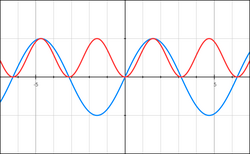
sin2x in red from about -2Π to 2Π The 2010 piece is mathematically the equivalent of x(sin2x + 1), so on that basis and taking her explanation for the 2019 piece, which goes, apparently, from x=-2Π to x=0 this looks as if there will be two waves of intensity, with the first having a larger maximum than the second. (This is, of course, WP:OR). Mike Turnbull (talk) 15:19, 14 September 2025 (UTC)[reply]
I noticed that in the comments on YouTube, multiple users claim that it is a high-expansion foam rather than an AFFF. Both of them are mentioned in the video, but the title says Aqueous Film Forming Foam (AFFF) Test. Is there anyone who could confirm this? Leyo08:15, 10 September 2025 (UTC)[reply]
Thank you. I noticed that in the datasheet provided in the website you linked, it says No intentionally added PFAS, PFOA or PFOS. Hence, it is not a AFFF at the same time, despite of the movie's name on YouTube.
Two of the trees easily visible from my window are London plane trees. At this time of year, they're carrying seed pods.
One of the trees has a fairly uniform distribution of pods across various branches. The other tree has pods only on a single branch (a single major branch, with pods along all the sub-branches of that major branch). The one branch with all the pods has such a dense concentration of them that it's visibly weighing down the various branches and twigs and making them droop.
The leaves on the branches without pods look no more or less healthy or dense than the ones on the branch with the pods.
They are monoecious. The article alludes to this, saying, with male and female flowers on separate stems. Perhaps in previous years the the tree didn't set as much fruit so the effect wasn't as obvious. Abductive (reasoning)19:12, 12 September 2025 (UTC)[reply]
If a black hole that was below stellar mass were inside a star, would that tend to inhibit fusion, or change fusion, or what? Supposing it were a neutron star inside a very large star instead, what then?(i'm wondering about the period of time before the neutron star possibly becomes a black hole thru accretion). If it were a white dwarf inside the star, I suppose it would quickly become a supernova muffled by the surrounding star?Rich (talk) 04:22, 13 September 2025 (UTC)[reply]
There are many types of larger stars, and I don't know if there is a generic description that fits all types and sizes, but I doubt that in any scenario the red dwarf could continue to exist as a separately distinguishable object. I asked Gemini for the case where the larger star is a red giant and was told:
The red dwarf would likely be stripped of its outer layers by the red giant's atmosphere and tidal forces. The now-naked core of the red dwarf would continue to spiral inward. As the two cores get closer, they would likely merge into a single, more massive core, potentially reigniting fusion in new and unpredictable ways. The result would be a dramatic event, perhaps even a supernova, depending on the combined mass.
Don't take Gemini's word for it, but since this is a hypothetical scenario whose outcome has no practical consequences I feel it is as good as any answer you may expect to get here, unless someone manages to run a simulation. ‑‑Lambiam13:34, 14 September 2025 (UTC)[reply]
Thanks. However I don't view questions like this of no practical consequence, it's unforeseeable. It's like naturalists who studied insects 200 years ago being asked by men of affairs "what possible use is studying bugs?" But most men of affairs of 200 years ago have not had the impact that modern knowledge of entomology has had...In pursuit of knowledge beyond what Gemini came up with, it seems possible that the red dwarf would strike at an angle to the axis of rotation of the red giant, leading to coriolus forces that would cause convection and mixing in the red giant.Rich (talk) 19:04, 14 September 2025 (UTC)[reply]
The red giant has a much lower density (by a factor billion or so) than the red dwarf, so the red dwarf won't be ripped apart by tidal forces. The red giant will.
Suppose we have F or G star, orbited by a K or M star, at a separation of about an astronomical unit, both on the main sequence. The higher-mass star is the first to turn into a red giant. It expands and, by conservation of angular momentum, spins very slowly. It expands so much that it engulfs the other star, which is unable to pull all that gas onto its own surface. It turns out, this doesn't necessarily destroy the lower-mass star. Through tidal forces and gas drag, it loses orbital energy and angular momentum, which is put into the gas of the common envelope as the star spirals in. That gas was loosely bound already, so it's possible that the envelope gets ejected into space (forming a beautiful planetary nebula) before the lower-mass star can merge with the core of the higher-mass star. The result is a white dwarf (the core of what used to be the higher-mass star) and a low-mass star (enriched in elements it collected from the red giant) in a very tight orbit, with an orbital period of hours or even less. Such binaries are known to exist. Cataclysmic variable stars have gone through this phase. It can even happen twice, when the other star also turns into a red giant, leading to a double white dwarf with a circa 15 minute orbital period. Again, those are known to exist. PiusImpavidus (talk) 19:46, 14 September 2025 (UTC)[reply]
In physics, when we consider power as a flux of energy across a surface, its unit is the Watt. A Watt is one Joule per second. So, when we talk about the energy of this flux, should we talk about Joules or Watt-seconds?
Consider raindrops, for example. Malypaet (talk) 21:47, 15 September 2025 (UTC)[reply]
Looking for "radiant energy", it seems that J is more common than Ws. Sources that give solely J as the unit: [3], [4], [5]. Sources that give J, with Ws as an alternative: [6], [7]. These are of course not all sources, but the first few book sources I found that gave an explicit SI unit. We also see kWh used, which makes particularly sense if you compare the energy to that delivered by sources that are conventionally measured in kWh: [8], [9], [10] ‑‑Lambiam01:56, 16 September 2025 (UTC)[reply]
Thanks, kWh can be converted to Ws, it's a matter of scale. I'm actually trying to find the difference between the kinetic energy of an object, which can be invariant over time, and the energy taken from a flow of objects across a surface, which adds up over time but with a fixed amount per time interval. I feel like this question has never been addressed and I'm not close to finding an answer. Malypaet (talk) 21:11, 16 September 2025 (UTC)[reply]
Hello, I read a long time ago for an article Spacecraft electric propulsion that such engines are not suitable for takeoffs from planets due to low thrust. In general, this is a fairly obvious thesis, but I cannot find authoritative sources for it. However, for Wikipedia, all theses must be substantiated with sources, in connection with which the question is - are there sources for this thesis? Thank you in advance. Vyacheslav84 (talk) 12:08, 16 September 2025 (UTC)[reply]
I don't think that's likely (about as likely as a source for the equally obvious assertion that "Elephants are not suitable as pets."). It's probably better to just edit that out of the article and shorten the sentence to "An electric rocket engine can provide enough thrust, applied over a long interval, for a spacecraft to manoeuvre near a planet." Clarityfiend (talk) 21:42, 16 September 2025 (UTC)[reply]
Is it obvious that this also holds for exoplanets, including all not yet discovered ones? If not, it may not even be true. ‑‑Lambiam22:54, 16 September 2025 (UTC)[reply]
The laws of physics put limits on the size–mass combinations of objects that would pass the current definition of planet. It seems to me that it is of some relevance, when assessing the validity of the statement, whether it is deemed to hold because it holds for the few planets whose size and mass happen to be known, or because it follows (given the definition) from what we know about planet-like objects in general. ‑‑Lambiam19:36, 18 September 2025 (UTC)[reply]
Expansion ratio discusses the extent to which liquid expands upon becoming gas. What's the comparable term for water-based liquids becoming solids? The ice article says "its solid form—ice frozen at atmospheric pressure is approximately 8.3% less dense than its liquid form; this is equivalent to a volumetric expansion of 9%". A Google search for "volumetric expansion" found the thermal expansion article, but I'm looking for a term that refers to the ratio itself, rather than to the general principle. Nyttend (talk) 04:29, 17 September 2025 (UTC)[reply]
The term "(volume) expansion ratio" is also used for the expansion of a solid melting into a liquid. For ice melting into water, this ratio is – exceptionally – less than 1, about 0.917. ‑‑Lambiam06:47, 19 September 2025 (UTC)[reply]