


Portal:Society


The Society Portal
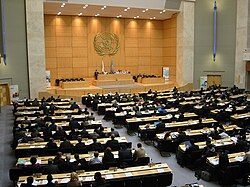
A society (/səˈsaɪəti/) is a group of individuals involved in persistent social interaction or a large social group sharing the same spatial or social territory, typically subject to the same political authority and dominant cultural expectations. Societies are characterized by patterns of relationships (social relations) between individuals who share a distinctive culture and institutions; a given society may be described as the sum total of such relationships among its constituent members.
Human social structures are complex and highly cooperative, featuring the specialization of labor via social roles. Societies construct roles and other patterns of behavior by deeming certain actions or concepts acceptable or unacceptable—these expectations around behavior within a given society are known as societal norms. So far as it is collaborative, a society can enable its members to benefit in ways that would otherwise be difficult on an individual basis.
Societies vary based on level of technology and type of economic activity. Larger societies with larger food surpluses often exhibit stratification or dominance patterns. Societies can have many different forms of government, various ways of understanding kinship, and different gender roles. Human behavior varies immensely between different societies; humans shape society, but society in turn shapes human beings. (Full article...)
Selected article

Featured picture

A 1773 engraving showing the Greek legend of the Calydonian Boar, which was sent by Artemis to ravage the region of Calydon in Aetolia because its king failed to honor her in his rites to the gods. Many Olympian heroes took part in hunting the boar, and it was eventually killed by Meleager and Atalanta, as depicted here.
Did you know...

- ... that the "You meet the nicest people on a Honda" ad campaign established Honda's brand image in the US and helped the Super Cub (pictured) become the top-selling motor vehicle in history?
- ... that according to legend, Robert Kirk was taken to fairyland for revealing the secrets of the Good People?
- ... that Steven Gan took advantage of a loophole in Malaysian Internet law to create the country's first independent news source?
Anniversaries this month

- 14 September 1955 - Foundation of the Society of Experimental Test Pilots
- 20 September 1848 - American Association for the Advancement of Science (pictured) created in Pennsylvania
- 21 September 1995 - Nepal Physical Society signed the agreement to be a reciprocal society with the American Physical Society (APS)
- 30 September 1845 - Phi Alpha Literary Society founded in a college dorm room
Selected quote

Selected biography
John Maynard Keynes, 1st Baron Keynes, CB, FBA (/ˈkeɪnz/ KAYNZ; 5 June 1883 – 21 April 1946) was a British economist whose ideas have profoundly affected the theory and practice of modern macroeconomics, and informed the economic policies of governments. He built on and greatly refined earlier work on the causes of business cycles, and is widely considered to be one of the founders of modern macroeconomics and the most influential economist of the 20th century.His ideas are the basis for the school of thought known as Keynesian economics, as well as its various offshoots. In the 1930s, Keynes spearheaded a revolution in economic thinking, overturning the older ideas of neoclassical economics that held that free markets would, in the short to medium term, automatically provide full employment, as long as workers were flexible in their wage demands. Keynes instead argued that aggregate demand determined the overall level of economic activity, and that inadequate aggregate demand could lead to prolonged periods of high unemployment. He advocated the use of fiscal and monetary measures to mitigate the adverse effects of economic recessions and depressions. Following the outbreak of World War II, Keynes's ideas concerning economic policy were adopted by leading Western economies. During the 1950s and 1960s, the success of Keynesian economics resulted in almost all capitalist governments adopting its policy recommendations. Keynes's influence waned in the 1970s, partly as a result of problems that began to afflict the Anglo-American economies from the start of the decade, and partly because of critiques from Milton Friedman and other economists who were pessimistic about the ability of governments to regulate the business cycle with fiscal policy. (Full article...)
Featured audio
Categories

|
|
Related portals


.svg/28px-Bisexuality_symbol_(bold%2c_color).svg.png)


Recognized content
Featured articles
 2012 phenomenon
- Chinua Achebe
- Alodia
- Amazing Grace
- Amphetamine
- Ancient Egyptian literature
- Archaeology, Anthropology, and Interstellar Communication
- Badnjak (Serbian)
- 1740 Batavia massacre
- 1689 Boston revolt
- Communication
- 1969 Curaçao uprising
- W. E. B. Du Bois
- Female genital mutilation
- First homosexual movement
- Johann Reinhold Forster
- From the Doctor to My Son Thomas
- Fuck (2005 film)
- Fuck: Word Taboo and Protecting Our First Amendment Liberties
- Growing Up Absurd
- Eric A. Havelock
- Hill 303 massacre
- History
- Homeric Hymns
- Homo antecessor
- Huia
- 1981 Irish hunger strike
- Jovan Vladimir
- Jomo Kenyatta
- Khawarij
- Christopher C. Kraft Jr.
- Theodora Kroeber
- Levantine Arabic
- Glynn Lunney
- Mantis
- Mayan languages
- Ole Miss riot of 1962
- Parthian Empire
- Peasants' Revolt
- Solo Man
- Jean-Joseph Rabearivelo
- Rosewood massacre
- Sair Tjerita Siti Akbari
- Sayfo
- Si Ronda
- St Scholastica Day riot
- Stonewall riots
- Subfossil lemur
- Torture
- Tutupaca
- Veiqia
- George Washington and slavery
- Zong massacre
Featured lists
Good articles
 1950s American automobile culture
- Timeline of the Egyptian revolution of 2011
- 2023 Serbian election protests
- Abolitionist Place
- Chimamanda Ngozi Adichie
- Agriculture
- Chakh Akhriev
- Akure–Benin War
- Alfred Kroeber: A Personal Configuration
- Algorithmic bias
- America's 60 Families
- Anarchism
- Anarchism in Cuba
- Victor Henry Anderson
- Andriamanelo
- Andriamasinavalona
- Anonymous (hacker group)
- Anti-nuclear movement in Australia
- Anna Apostolaki
- Religion in pre-Islamic Arabia
- Architecture of the Song dynasty
- The Archives of the Planet
- Aroused (film)
- Australopithecus africanus
- Australopithecus afarensis
- Australopithecus bahrelghazali
- Australopithecus deyiremeda
- Australopithecus garhi
- Australopithecus sediba
- Azerbaijan
- Bad Dürrenberg burial
- Balangoda Man
- Banai (goddess)
- Bani Zeid al-Gharbia
- Barbad
- Bede
- Before the Dawn (Wade book)
- Beowulf
- Hans Bethe
- Biblical criticism
- Birth control
- Black Lives Matter
- Boerehaat
- The Bog People
- Bomis
- Boobrie
- Boston Massacre
- Boys' love
- Tawana Brawley rape hoax
- Breton Ballads
- Bury St Edmunds witch trials
- Cagot
- Catilinarian conspiracy
- Cueva de las Manos
- Celebrity Studies
- Centre-right politics
- Hector Munro Chadwick
- S. J. V. Chelvanayakam
- Child prostitution
- Childhood nudity
- History of Christian thought on persecution and tolerance
- Church Offensive
- A Community of Witches
- Compulsory Miseducation
- Coney Island
- Coon hunting
- Copenhagen
- Ion Creangă
- Criminalization of homosexuality
- Cro-Magnon
- Cult film
- Culture of the Song dynasty
- Cutting the Mustard
- Daju kingdom
- Hilda Ellis Davidson
- Demographic history of Scotland
- Demographics of the Supreme Court of the United States
- Denisovan
- Deus Ex: Human Revolution
- Diaphoneme
- Dictator novel
- Diver communications
- Dmanisi hominins
- Domestication
- Double burden
- Dreamtime (book)
- Émile Durkheim
- EST and The Forum in popular culture
- Edo literature
- Education
- Elf
- Ely and Littleport riots of 1816
- Eskaya people
- Extremely online
- Family in the United States
- Kingdom of Fazughli
- The finger
- Adrian S. Fisher
- Forensic anthropology
- Free Expression Policy Project
- Stephen Fuchs
- Future of Families and Child Wellbeing Study
- Garbage Offensive
- Gender and sexual minorities in the Ottoman Empire
- Genetically modified organism
- Anca Giurchescu
- God's Choice
- Erving Goffman
- Paul Goodman
- Gwerz Skolan
- Harbin cranium
- He-Man as a gay icon
- Help Wanted (SpongeBob SquarePants)
- Herto Man
- Historiography of the Crusades
- History of botany
- History of Milton Keynes
- History of agriculture
- Hitachi Magic Wand
- Winifred Hoernlé
- Homo erectus
- Homo rudolfensis
- Homo ergaster
- Homo habilis
- Homo heidelbergensis
- Homo luzonensis
- Homo naledi
- Hooray Henry
- Human
- Human history
- Human interactions with insects
- I Ching
- Igbo literature
- Igbo people
- Globalization and women in China
- Incel
- Ivatan people
- 1968–1969 Japanese university protests
- Java Man
- Jewellery of the Berber cultures
- Jews in the civil rights movement
- Joint custody (United States)
- Kabwe 1
- Kalākaua
- Kanak people
- 2008 attacks on Christians in southern Karnataka
- KCOS (TV)
- Kenyanthropus
- Kīlauea
- Kirkbride Plan
- Knowledge
- Korean mythology
- Alan Kotok
- Kulintang
- LGBTQ and Wikipedia
- Language
- Lantian Man
- Ralph Larkin
- Larries
- Latin American Boom
- Latin American Defense Organization
- H. Rex Lee
- Lesbian
- Life replacement narratives
- Liliʻuokalani
- Literature of Botswana
- Luttra Woman
- Sorley MacLean
- Magic, Witchcraft and the Otherworld
- Malagasy hippopotamus
- Bronisław Malinowski
- The Man-Eating Myth
- Man of the Hole
- March for Our Lives Portland
- March for Science Portland
- March of loyalty to martyrs
- Prince Marko
- Marriage in the United Arab Emirates
- Karl Marx
- Mengdu
- Josef Mengele
- Methamphetamine
- Maria Mies
- Misanthropy
- Models of communication
- A More Perfect Union: Advancing New American Rights
- Mork Goes Erk
- Mountain Meadows Massacre
- Music in early modern Scotland
- Music of Sudan
- Myth of the clean Wehrmacht
- George Naʻea
- Native American mascot controversy
- Neanderthal
- The Neanderthals Rediscovered
- Robert Alexander Neil
- Birger Nerman
- New Zealand literature
- Hal Newhouser
- No Lifeguard on Duty
- Autonomous Republic of Northern Epirus
- Not My Presidents Day
- Not in Front of the Children
- Nudity
- Observations Made During a Voyage Round the World
- Odyssey
- Ohlone
- On the Internet, nobody knows you're a dog
- On the Pulse of Morning
- Otaku
- Paranthropus
- Paranthropus aethiopicus
- Paranthropus boisei
- Paranthropus robustus
- Adam Parry
- Peking Man
- Mau Piailug
- Bajo Pivljanin
- Poetry in The Lord of the Rings
- Political party
- Polyethnicity
- Positioning theory
- Potential cultural impact of extraterrestrial contact
- Poverty in ancient Rome
- 1956 Poznań protests
- Pratapgarh Kingdom
- Protests in Canada against the Sri Lankan civil war
- Proto-globalization
- Psychedelic music
- Iveta Radičová
- Rally to Restore Sanity and/or Fear
- Aparna Rao
- A Rape on Campus
- Reborn doll
- Redskin
- Herbert Hope Risley
- The Road to Total Freedom
- Romania in the Early Middle Ages
- Rose Street Club
- Edward Said
- Samgong bon-puri
- Sarawak
- Savika
- Saxe–Goldstein hypothesis
- Schramm's model of communication
- Seattle Fault
- Sex, Sin, and Blasphemy
- Idries Shah
- Sheng nü
- Si Prat
- Silver
- Sima de los Huesos hominins
- Simele massacre
- Maria Simon (sociologist)
- Choor Singh
- Kateryna Skarzhynska
- Slavery in Haiti
- Social identity theory
- Society
- Sociology of leisure
- Source–message–channel–receiver model of communication
- Stay-at-home dad
- Stikine River
- Stratford Dialectical and Radical Club
- Sudanese literature
- Syrian literature
- Tautavel Man
- Team effectiveness
- Tefillin
- Theory of Literature
- Think of the children
- Thus have I heard
- Tolkien and the modernists
- Trance and Dance in Bali
- Truce term
- Uncommitted National Movement
- Upanishads
- Wales
- Max Weber
- Weiquan movement
- Well-being
- Welsh cuisine
- When a man argues against two beautiful ladies like this, they are going to have the last word
- Whiskey Rebellion
- Who We Are and How We Got Here
- Benjamin Lee Whorf
- Widener Library
- Eugene Wigner
- Henry Winkler
- Witch hunts in India
- Women of the Young Lords
- Women's March on Portland
- Yeren
- Yuanmou Man
- Yuri (genre)
- Yusuf Meddah
- Evangelos Zappas
- Zhang Jingsheng
- Florian Znaniecki
Featured pictures
-
 20151030 Syrians and Iraq refugees arrive at Skala Sykamias Lesvos Greece 2
 -
 Bertillon, Alphonse, fiche anthropométrique recto-verso
 -
.jpg/120px-Bust_of_Ibn_Khaldun_(Casbah_of_Bejaia%2c_Algeria).jpg) Bust of Ibn Khaldun (Casbah of Bejaia, Algeria)
Bust of Ibn Khaldun (Casbah of Bejaia, Algeria) -
 Chicago and Northwestern railroad locomotive shop fsac.1a34676u
 -
Daisy (1964)
-
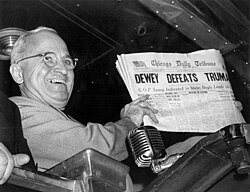 Dewey Defeats Truman
 -
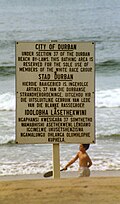 DurbanSign1989
 -
%2c_1896.jpg/250px-Frances_Benjamin_Johnston%2c_Self-Portrait_(as__New_Woman_)%2c_1896.jpg) Frances Benjamin Johnston, Self-Portrait (as "New Woman"), 1896
Frances Benjamin Johnston, Self-Portrait (as "New Woman"), 1896 -
 If you talk too much, this man may die
 -
 Jane Addams - Bain News Service
 -
 Jewish Children with their Teacher in Samarkand
 -
 Marine da nang
 -
Nanook of the North
-
 Sahelanthropus tchadensis - TM 266-01-060-1
 -
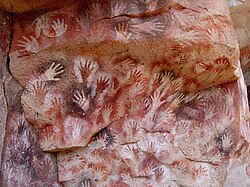 SantaCruz-CuevaManos-P2210651b
 -
 Scourged back by McPherson & Oliver, 1863, retouched
 -
 Self portrait of Edward Sheriff Curtis
 -
Thuong Duc, Vietnam - A Viet Cong prisoner awaits interrogation at the A-109 Special Forces Detachment in Thuong - NARA - 531447
-
 US Marshals with Young Ruby Bridges on School Steps
 -
 United States President Barack Obama bends down to allow the son of a White House staff member to touch his head
 -
 W.E.B. Du Bois by James E. Purdy, 1907
 -
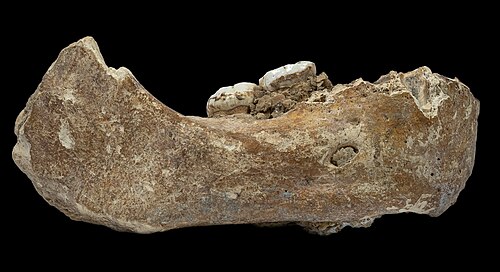 Xiahe mandible

Things you can do
 |
Here are some tasks awaiting attention:
|
WikiProjects

Web resources
- Definition of Society from the OED.
- Internet Modern History Sourcebook: Industrial Revolution
- "The Day the World Took Off" Six part video series from the University of Cambridge tracing the question "Why did the Industrial Revolution begin when and where it did."
- BBC History Home Page – Industrial Revolution
- National Museum of Science and Industry website – machines and personalities
- Industrial Revolution and the Standard of Living by Clark Nardinelli - the debate over whether standards of living rose or fell.