
Four Bulldog seniors take top 10 awards during regional event
Kearney, Mo., May 8, 2021: The Bulldogs have the formula for success in biomedical sciences.
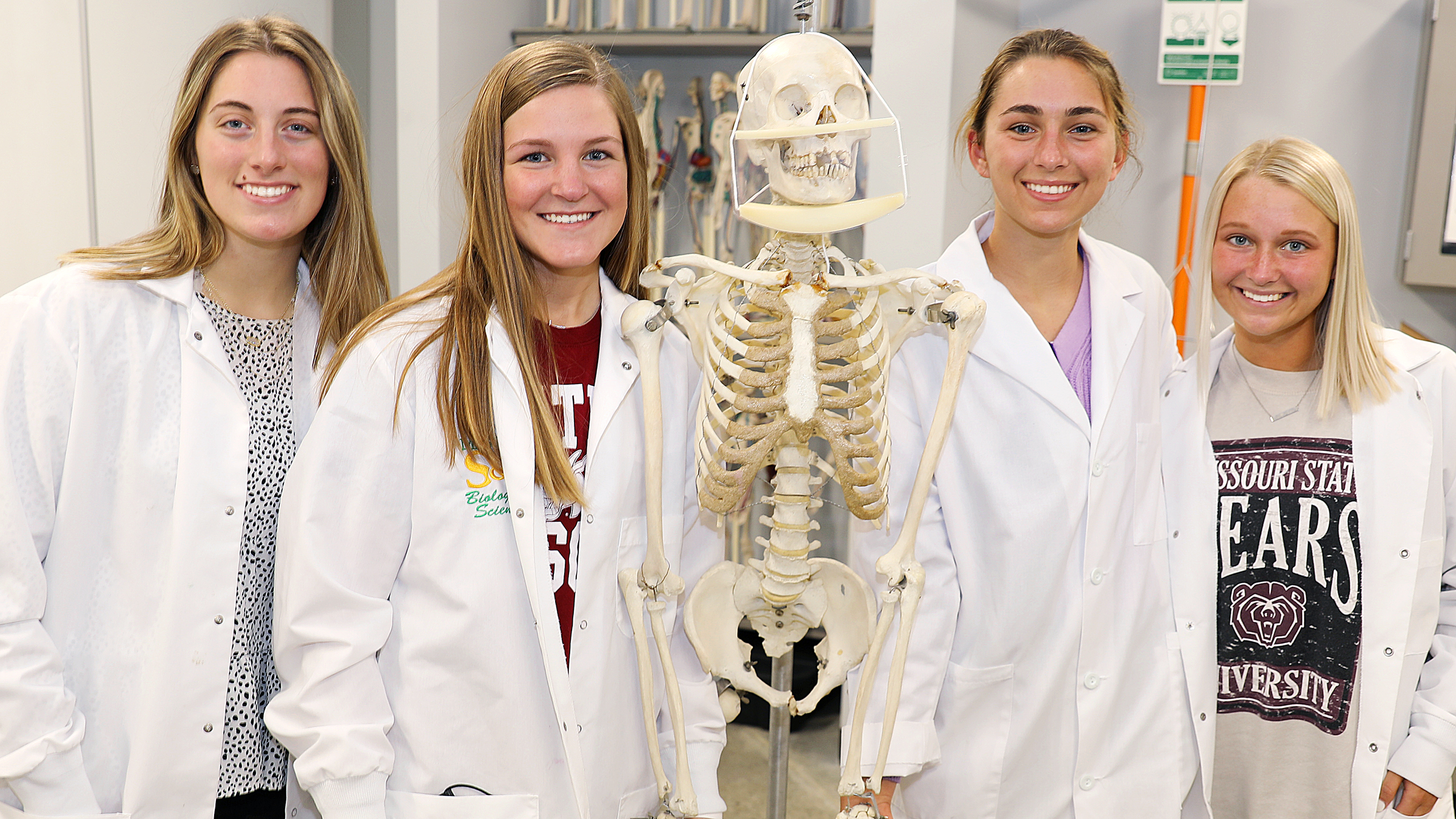
Kearney High School seniors Eliana Walker, Kaycee Maynard, Kennedy Jacobsen and Melanie Smith each garnered top 10 awards during a regional Project Lead the Way (PLTW) event recognizing students for their capstone projects. The virtual event was held on May 4 and included entries from 446 students.
Every year, high school seniors who take PLTW engineering and biomedical sciences classes have the opportunity to develop innovative, high-tech solutions to challenges they’ve identified. The students do extensive research and develop prototypes.
These capstone projects are then showcased and scored annually by the PLTW organization in the Kansas City region, according to KHS PLTW Biomedical Sciences teacher Michelle Lawrence.
“These projects are always very impressive,” Ms. Lawrence said. “This year’s seniors worked incredibly hard and produced graduate-level research. This is a great accomplishment and I am so proud of them.”
Ms. Maynard and Ms. Jacobsen were recognized for their “G.I.M. Prototype,” a glucose insulin machine designed to be easier to use and more convenient.
“Our goal is to help relieve the stress experienced by type one diabetics,” they wrote in their project report.
Ms. Smith’s “Bracket CAP” is designed to reduce discomfort experienced by people with braces. Her concept and prototype were deemed good enough for an “Innovator Award,” a $1,000 scholarship and an opportunity to make her idea a reality.
“Braces have been known to cause cuts, sores and irritation with little help from existing products,” she wrote. “Bracket CAP is a new, innovative way to twist a small plastic CAP onto the bracket of braces to ensure durability while eating and (during) physical activity.”
Finally, Ms. Walker was honored for her work to develop the “BACH,” Biometric Advanced Check-In for Hospitals.
“(The BACH) uses fingerprint scanning inside a modified pulse oximeter to provide a quicker, more accurate way of checking in patients and collecting vitals,” she wrote in her project report.